
Betfair review Ireland: register line 1010108, host checks and open questions

Type the host by hand before anything else
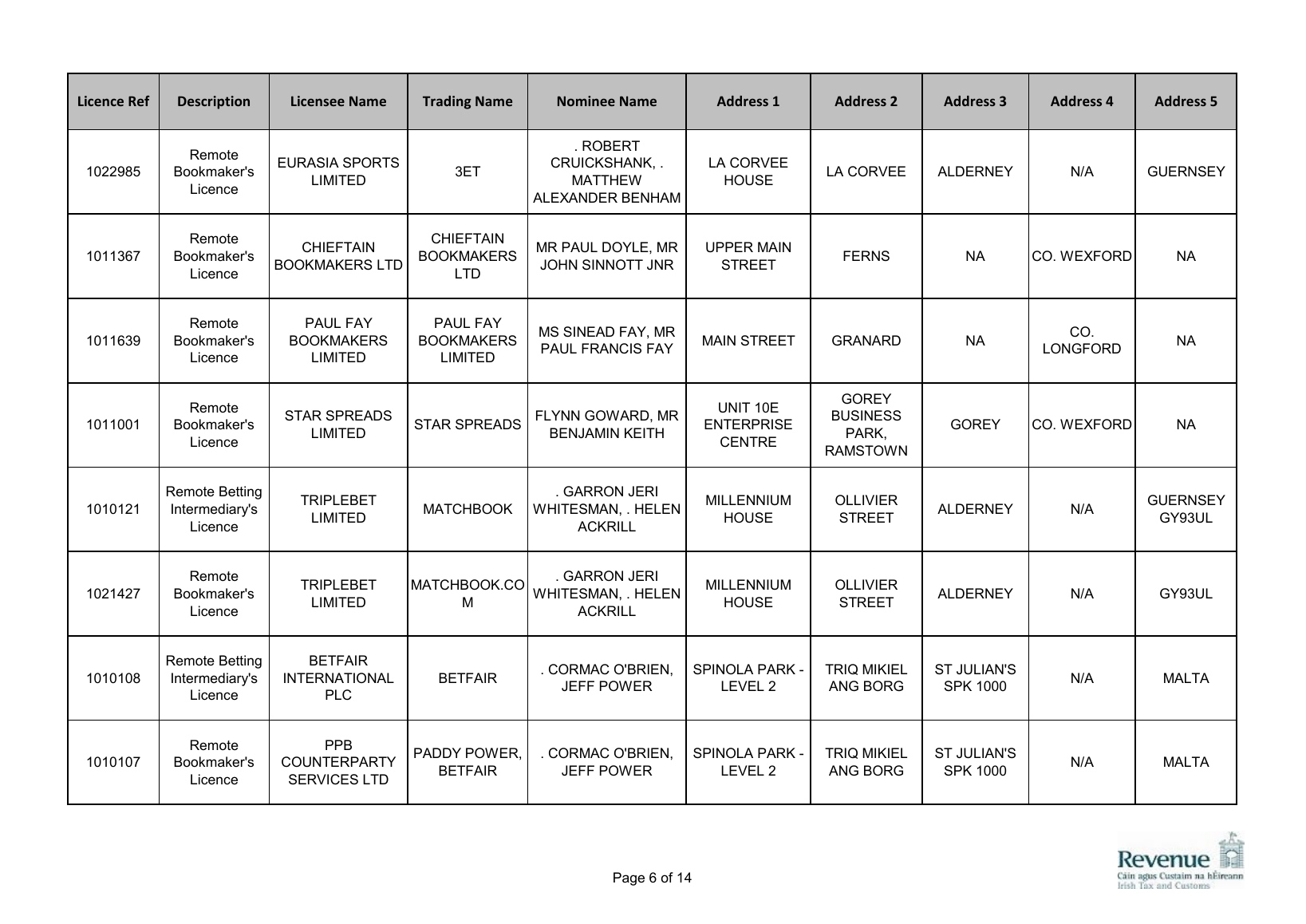
An exchange account is only as sound as the host that loads it, so the first move is mechanical. Type betfair.com by hand and reach the account from that typed address, never from a search advert, a push notification or a link inside a message. The Revenue register dated 30 June 2026 attaches Betfair International plc to the trading identity under remote betting intermediary reference 1010108, and that reference belongs to the registered identity rather than to any host that happens to resemble it.
Lookalike hosts fail in three predictable ways. A word is bolted on so the string reads like a login or a country page. A character is swapped for a near-twin, usually rn for m or 1 for l. Or the same string arrives under a different suffix. Each of those is a separate service with separate money handling, whatever the page renders.
A mirror can copy layout, colour and a price ticker. It cannot copy a register line, a certificate issued to the domain you typed, or the balance and open positions you already hold.
What the register entry names, and what it leaves open
The primary record is one line in a Revenue publication rather than a customer-facing licence profile. It carries an entity name, a trading name or domain field, a reference number and a publication date of 30 June 2026, and the Revenue register of licensed remote bookmakers is open to anyone who wants to hold it beside the host in front of them.
Three limits matter. The captured line records the trading identity and the reference, and does not by itself pin the record to the host character by character. No expiry is recorded in the material to hand, so the entry evidences a position on the publication date and nothing after it. And a register is a licensing record, not a service-quality record: listing shows that an entity is licensed, not that a voided market, a bonus term or a closed account will be handled well.
| Field | Recorded value | Tier | Read on |
|---|---|---|---|
| Entity | Betfair International plc | Primary | 21 Aug 2026 |
| Reference | 1010108, remote betting intermediary | Primary | 21 Aug 2026 |
| Register date | 30 June 2026 | Primary | 21 Aug 2026 |
| Trading name or domain field | Present, wording not character-level host specific | Primary | 21 Aug 2026 |
| Expiry | Not recorded in the material held | Unknown | — |
| Payout test | None carried out | Unknown | — |
Betfair International plc, reference 1010108 and its register neighbour
Two references sit on the same register page and are easy to confuse. Reference 1010107 records PPB Counterparty Services Ltd under the Paddy Power trading identity; 1010108 records Betfair International plc. Same page, different legal persons, different numbers, and a support ticket, card claim or formal complaint has to name the right one. The neighbouring file is at Paddy Power if accounts are held on both, and the rest of the market sits in our review index.
The wording differs between the two lines as well: one is recorded as a remote bookmaker reference, the other as a remote betting intermediary reference. That classification difference is part of the primary record. What it changes about customer remedies in a dispute is not settled by the material to hand, and the gap is left open rather than filled with an assumption. For correspondence, copy the entity name from the register line rather than from a page footer, because footers change without a register update.
Licensed in Ireland, and the handover under way
Remote betting into the Irish market has been licensed through Revenue, which is the record used above. The framework is moving: the Gambling Regulation Act 2024 sets the statutory regime and creates the Gambling Regulatory Authority of Ireland, and the authority's operator portal began taking remote and in-person betting applications in February 2026 with the Revenue transition noted on it.
Two practical consequences follow. Until an operator appears in the new authority's own published listing, the Revenue register stays the checkable document, which is why the June line carries the weight. And licensing status is time-stamped by nature, so a June check is a June fact: repeat it before a large deposit instead of trusting a stored screenshot. The steps we run are set out at licence checks.
| Body | What it evidences here | Tier |
|---|---|---|
| Revenue | Register line dated 30 June 2026 with entity, reference and trading field | Primary |
| GRAI | Application portal open from February 2026, Revenue transition noted | Primary |
| Gambling Regulation Act 2024 | Statutory framework and the authority's creation | Primary |
Scam or legitimate: reading the amber signal honestly
The signal is amber for evidentiary reasons, not rhetorical ones. Green would need current primary evidence tied to the precise host and entity a customer is looking at. What exists is a June register line naming an entity and a trading field, with no expiry recorded and no character-level host binding captured. Red would need an official adverse record or corroborated documented harm, and nothing of that kind has been supplied.
So the defensible statement is narrow. An entity of that name is recorded under reference 1010108 as of 30 June 2026, and no adverse official record is in the file. That is not a promise about payouts, account restrictions, bonus voiding or settled markets, and it says nothing at all about the many hosts trading on the same wordmark. If the host checks above pass and you choose to continue, do it from your own bookmark or from the routed link.
Where user statements sit, and where they stop
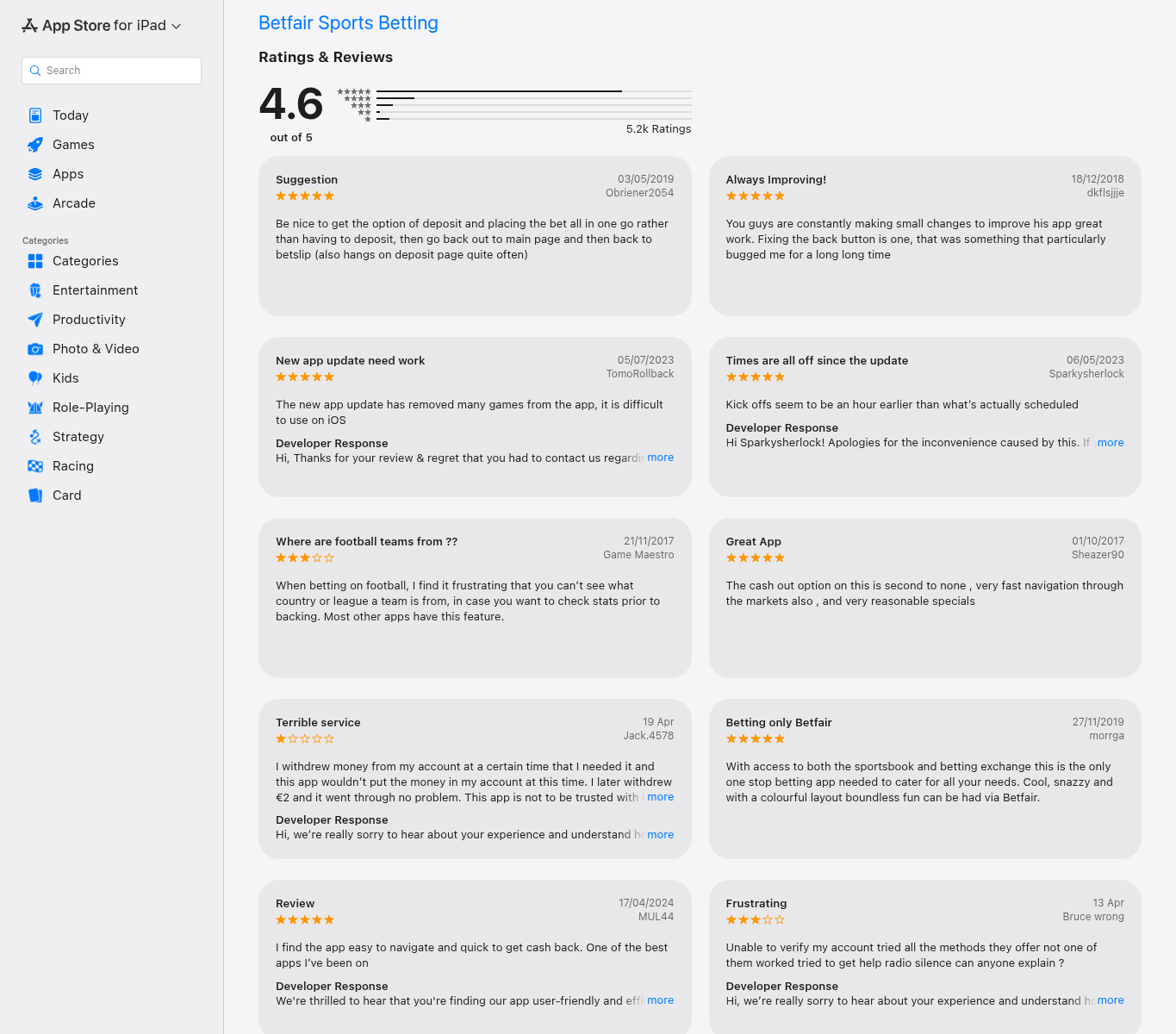
Dated app-store ratings and written statements about the mobile app exist and were read on 21 August 2026. They stay in the user-context tier: allegations, impressions and one-sided accounts, useful for spotting a pattern worth testing, never a finding on their own. A complaint is an allegation until a dated competent-source record says otherwise.
Read them for the shape of the problem rather than the verdict. Repeated mentions of one mechanism — a verification demand landing only at payout, a limit that did not apply, a market settled against expectation — tell you which of your own records to keep. Volume of sentiment tells you nothing about legality. How the tiers are separated is described at our method.
Deposits, stored cards and how much exposure to accept
No verified list of accepted deposit methods is held here, so anything on a payments screen counts as operator-stated until your own bank record confirms how it behaves. That distinction prevents most payment surprises: the descriptor on your statement, the entity it names and the currency the charge lands in are all facts you can check yourself within a day.
Exposure control is dull and effective. Fund from an account that does not hold savings. Leave a card unstored where the option exists, because a stored credential on a lookalike host is a credential handed to a stranger. Set a deposit limit before the first stake rather than after a losing run, and keep the dated confirmation; responsible gambling tools covers what to set and when, and support routes are collected at urgent help. Our standing tests live at payment checks.
| Stage | What to record | Why it helps later |
|---|---|---|
| First deposit | Date, amount, statement descriptor, entity named | Ties the charge to a legal person for a bank claim |
| Limit set | Screenshot with the date visible | Evidence if a limit is not applied |
| Bonus accepted | Full terms text as displayed | Wagering disputes turn on the version you saw |
| Declined payment | Time, exact error text, method | Separates a bank block from an account restriction |
Withdrawals: what is untested and what to time yourself
No payout test has been carried out for the operator in this file, and no clearing-time claim is supported by the records held, so none is published. Anyone quoting a specific window without a dated test is guessing.
A small self-run test is worth more. Request a modest withdrawal early, before a balance you care about builds up, and log four timestamps: the request, any verification prompt, the moment the operator marks it processed, and the credit on your bank record. The gap between the third and fourth is the bank's; the gap between the first and third is the operator's. Confusing the two is the most common reason a written complaint goes nowhere.
Two flags deserve action rather than patience: a withdrawal reversed into a playable balance without your request, and a verification demand that appears only after the first payout attempt while deposits flowed freely. Both are documentable in seconds.
Identity verification and the paperwork to keep ready
No verified statement of which documents are requested, or at what threshold, is held here, so the verification policy is treated as unconfirmed and should be read from the account terms in force when you register.
Preparation is the part under your control. Register in the exact name on your identity document, with the address your bank holds, and fund from an instrument in your own name; third-party funding is the most reliable way to freeze a payout for weeks. Keep a legible copy of everything uploaded with the date and the upload confirmation, because a second and third request for the same document is common and a dated copy shortens the argument.
Treat unusual requests as suspect until confirmed from your bookmark: a full statement history, an image of an unredacted card, or documents solicited to a personal email address rather than through the account.
If something goes wrong: the order to escalate in
Escalation works when it is sequential and written. Start inside the account so a reference number exists, keep everything in text rather than on a call, and state the outcome you want in the first message: the amount, the dates and the action required. Copies of everything sent belong in your own file, and the format we use is at complaints.
| Step | Who | What to send | Status in the records held |
|---|---|---|---|
| 1 | Operator support, in writing | Account reference, dates, amounts, screenshots, requested outcome | Internal route, no published timeline held |
| 2 | The registered entity | The same file, addressed to the entity recorded under 1010108 | Entity name is a primary record |
| 3 | Your bank or card issuer | Statement descriptor, transaction dates, correspondence | Independent of the operator |
| 4 | Irish regulatory contact | Short chronology, primary documents only | Consumer dispute handling not evidenced |
Step four carries a caveat worth stating plainly: the portal evidence concerns applications and the Revenue transition, not a consumer redress function, so no promise is made about that route.
A five-minute clone check before you log in
Clone defence is a routine rather than an instinct. Run it before any session involving money, and always after a message that arrived unprompted.
- Type the host, compare it character by character with the register line, then load it only from your own bookmark.
- Check the certificate names the registrable domain you typed, not a similar string under another suffix.
- Compare the entity name shown in the footer with the entity recorded under reference 1010108; a mismatch is the cheapest red flag available.
- Log in and confirm the balance and open positions match what you last saw, because a copy cannot reproduce your account state.
- Refuse any request to move funds, install a helper application or pass on a verification code, wherever it appears to come from.
Two habits carry most of the weight: never reach the account from an advert, and never take a verification link at face value. Hosts already flagged as impersonating Irish-facing bookmakers are listed at scam warnings.
Risks, open questions and the evidence timeline
Three risks dominate for an Irish customer here. Impersonation is the largest, because a heavily searched wordmark makes a convincing mirror cheap to build. Staleness is next: a June register line is a June fact and has to be rechecked rather than remembered. The classification question is third, since the register records an intermediary reference and its effect on remedies is unresolved in the material held.
| Date | Record | Tier |
|---|---|---|
| 2024 | Gambling Regulation Act 2024 enacted, authority created | Primary |
| February 2026 | Application portal opens for remote and in-person betting | Primary |
| 30 June 2026 | Register publication naming the entity and reference 1010108 | Primary |
| 21 August 2026 | All listed records read again; dated app statements taken as context | Mixed |
The open items stay open: no expiry, no character-level host binding in the register field, no verified payment or verification policy, no payout test. Dated corrections are welcome through contact, and grading rules are set out in our editorial policy.
Questions Irish customers ask most
Is Betfair licensed to take bets from Ireland?
The Revenue register dated 30 June 2026 records Betfair International plc under remote betting intermediary reference 1010108, so licensed status is evidenced on that date. No expiry is recorded in the material held and the register field is not character-level host specific, which is why the signal is amber rather than green.
Which legal entity holds the account relationship?
The register names Betfair International plc under reference 1010108. A neighbouring line records PPB Counterparty Services Ltd under the Paddy Power identity at 1010107, so correspondence, card claims and formal complaints have to name the correct entity.
How can I tell the registered host from a copy?
Type betfair.com yourself, load it only from your own bookmark, check the certificate names the domain you typed, compare the footer entity with the register line, then confirm your balance and open positions match what you last saw. A copy cannot reproduce your account state.
How long do withdrawals take?
No dated payout test exists in the records held, so no timing figure is published. Log the request time, any verification prompt, the processed marker and the credit on your bank statement; the final gap belongs to the bank, the earlier ones to the operator.
What is the first step if a payout stalls?
Open a written complaint inside the account so a reference exists, stating the amount, the dates and the outcome you want, then escalate to the entity recorded on the register and, in parallel, to your bank or card issuer with the statement descriptor. Consumer dispute handling by the Irish authority is not evidenced in the records held.
Does an amber rating mean it is a scam?
No. Amber records open evidence: a primary licensing line exists, no adverse official record has been supplied, and several checks remain untested, including expiry, host-level binding, payment policy and payouts. Red is kept for an official adverse record or corroborated documented harm.